
Accounting as Code Insights
Technical articles on API-first accounting, UK tax compliance, and building financial software the way developers expect.

Building Idempotent Financial APIs
Network timeouts happen. Retries must be safe. Here's how to implement idempotency keys for financial APIs so duplicate requests produce the same result.
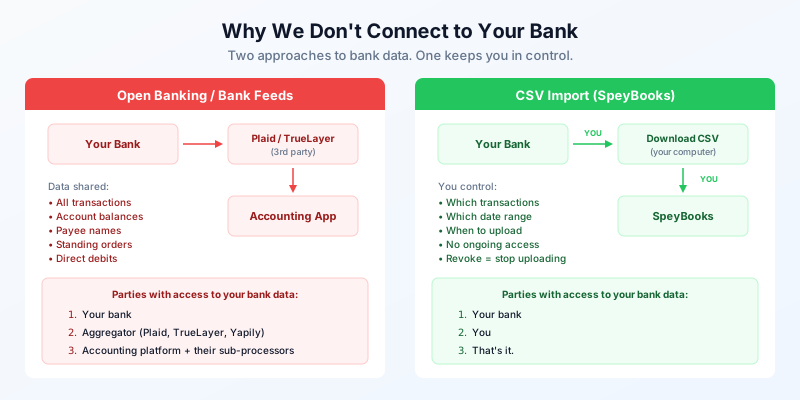
Why We Don't Connect to Your Bank
Open Banking is convenient. It also gives third parties persistent access to your financial data. SpeyBooks takes a different approach.
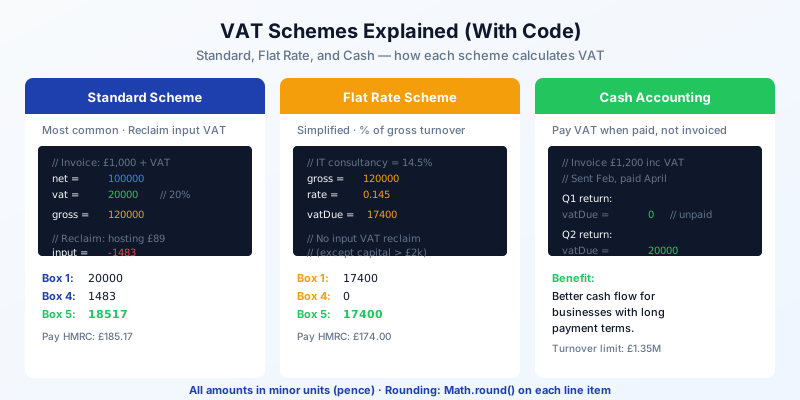
VAT Schemes Explained (With Code)
Standard, Flat Rate, and Cash Accounting — how each UK VAT scheme works, when to use it, and how to implement the calculations in code.
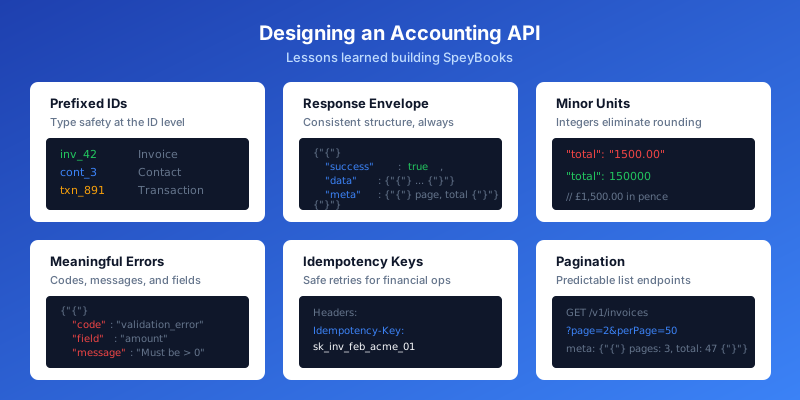
Designing an Accounting API: Lessons Learned
Prefixed IDs, minor units, idempotency keys, and consistent error handling. The design decisions behind the SpeyBooks API and why they matter.

MTD for Developers: A Technical Guide
Making Tax Digital demystified for developers. OAuth flows, the 9-box VAT return, HMRC's API sandbox, and what your software actually needs to submit.
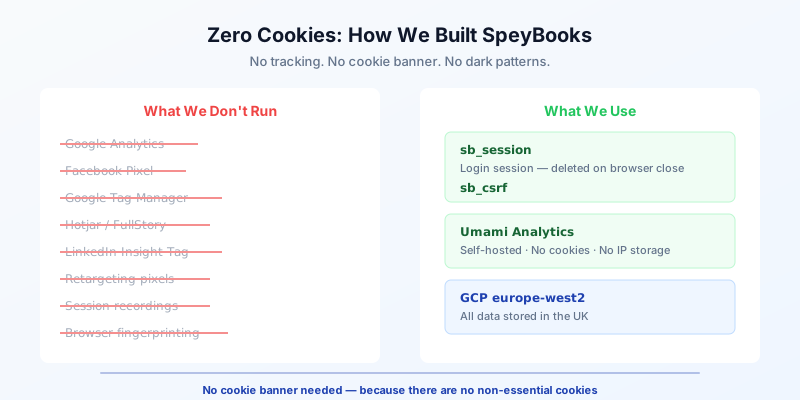
Zero Cookies: Building SpeyBooks Without Tracking
No Google Analytics. No tracking pixels. No cookie banner. Here's the technical architecture behind SpeyBooks' zero-tracking approach.
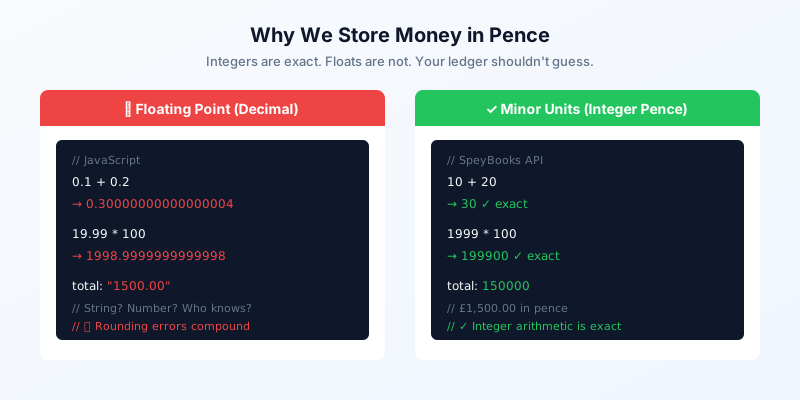
Why We Store Money in Pence (And You Should Too)
Floating-point arithmetic loses money. Integers don't. Here's why SpeyBooks stores every amount in pence and how to do it in your own systems.
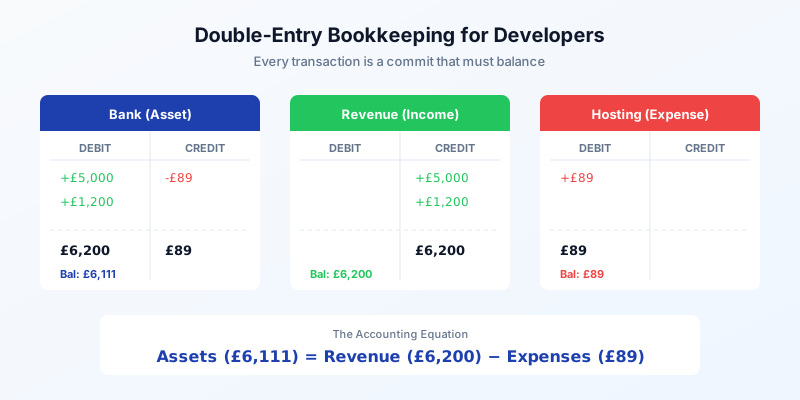
Double-Entry Bookkeeping for Developers
Double-entry bookkeeping is a distributed consensus mechanism. Every transaction is a commit that must balance. Here's how it works in code.
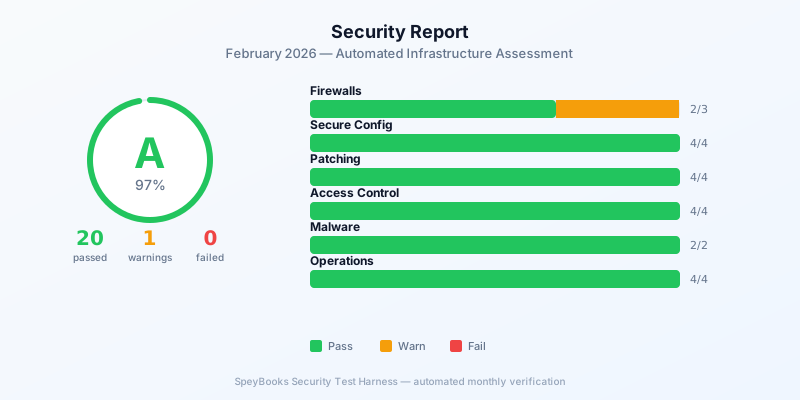
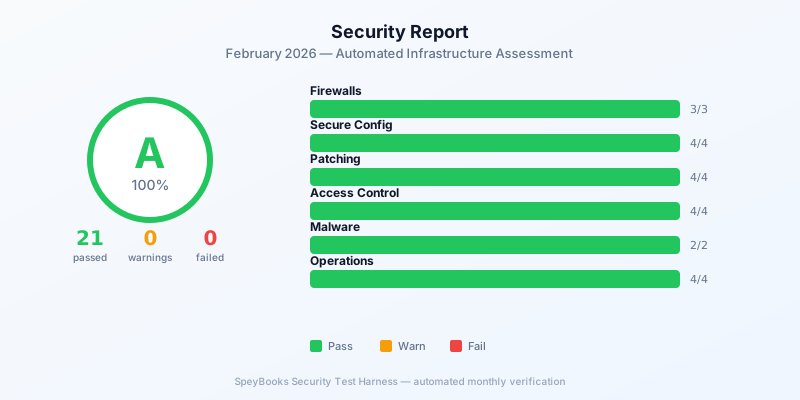
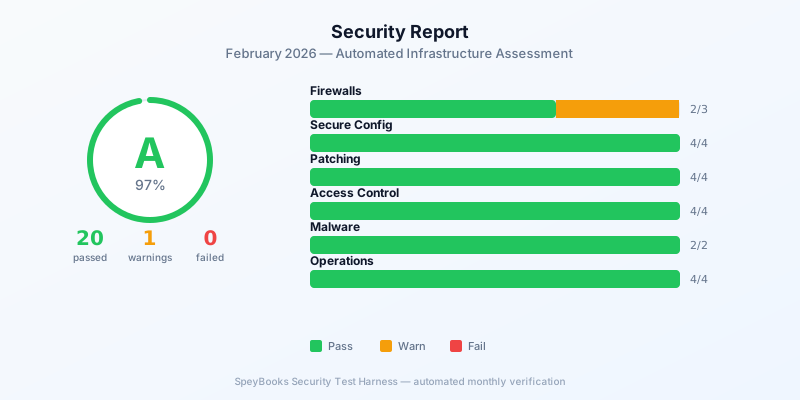
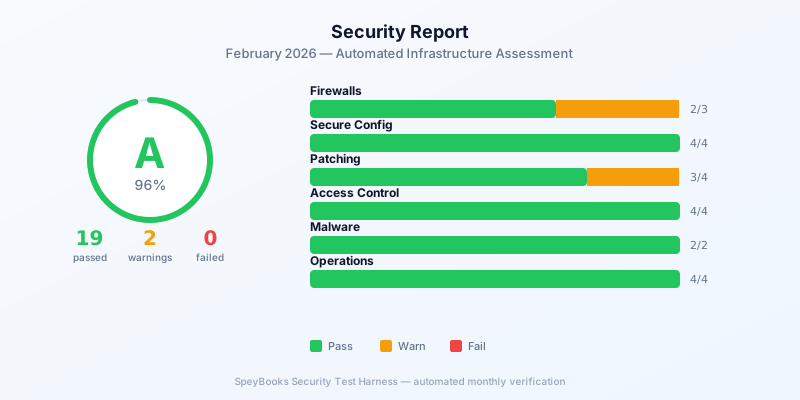
Security Report — February 2026
Monthly automated security assessment of SpeyBooks infrastructure. Grade: A (97%).
No articles match your search.
Try it yourself
SpeyBooks is accounting software built like developer tools. API-first, privacy-respecting, and built for UK contractors.